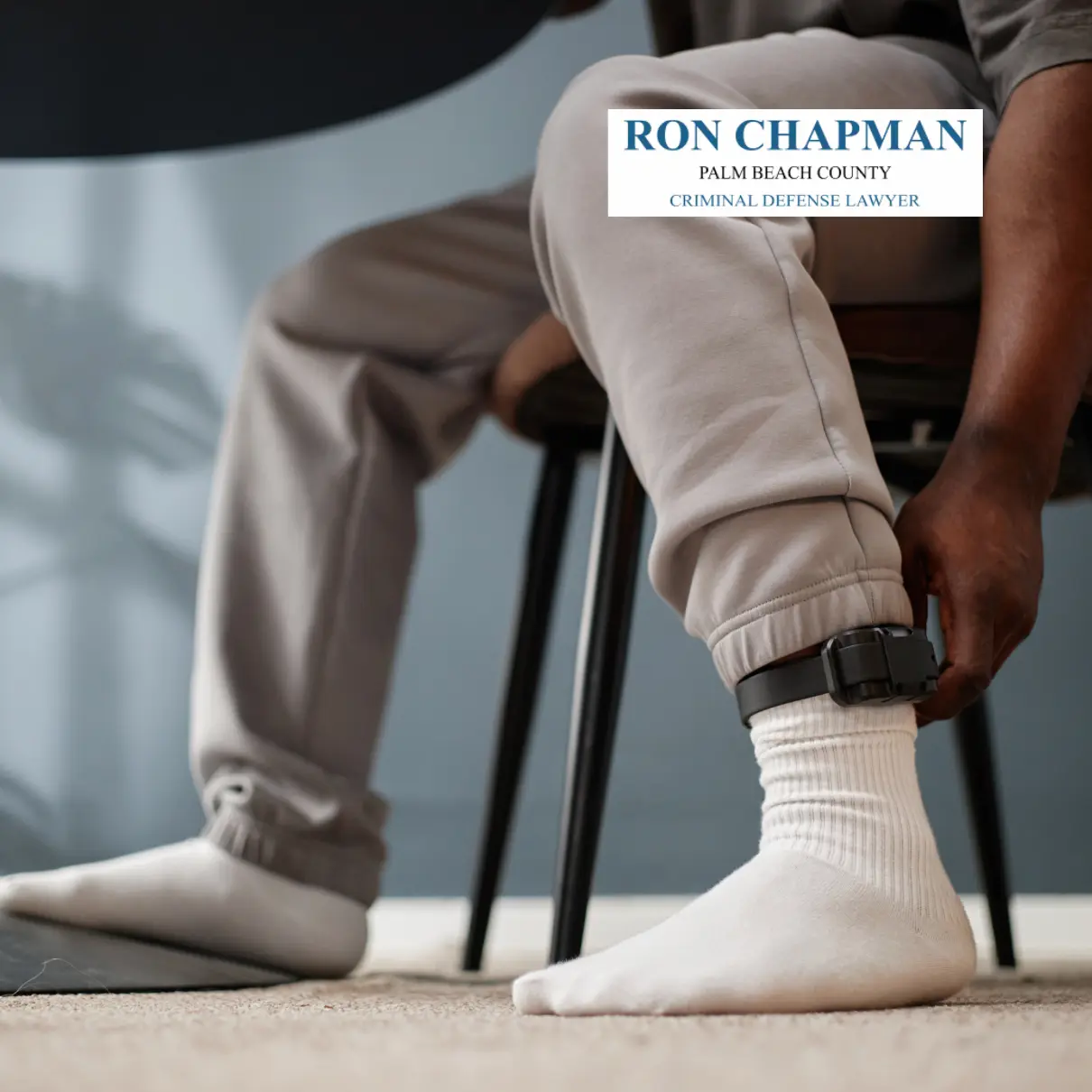
You may have missed an appointment with your probation officer, failed a drug test, fallen behind on required payments, or been accused of committing a new crime. Now you’ve learned that you could be facing a violation of probation (VOP), and your biggest question may be what happens next.
If you’re wondering what happens at a VOP hearing, the proceeding is different from a criminal trial. There is no jury, the State of Florida (State) has a lower burden of proof, and different rules apply to the evidence the judge can consider. The judge determines whether you violated probation and, if so, what should happen next.
The consequences can be serious, particularly if the court revokes your probation. However, an alleged violation does not automatically mean your probation will be revoked or that you’ll receive a jail or prison sentence. The circumstances of the alleged violation, the evidence, your probation history, and Florida law can all affect what happens in your case.
At a Glance
- A VOP hearing allows a Florida judge to determine whether you violated a condition of probation.
- The State must prove a willful and substantial violation by the greater weight of the evidence.
- There is no jury at a probation violation hearing.
- Hearsay evidence may be admitted, but hearsay alone cannot support probation revocation.
- Depending on the circumstances and Florida law, the court may continue or modify probation, place you on community control, or revoke probation and impose another sentence.
- Florida law provides different procedures and potential sanctions for certain technical violations.
What is a Violation of Probation in Florida?
When a Florida court places you on probation, you must follow the conditions imposed as part of your probation sentence. Those probation conditions vary by case but may require you to report to a probation officer, submit to a drug or alcohol test, complete community service hours, pay fines or court costs, pay restitution, complete treatment, and avoid committing new criminal offenses.
A probation violation occurs when you fail to comply with a condition of your supervision. Violations are commonly described as technical or substantive, depending on whether the allegation involves noncompliance with a condition of supervision or alleged new criminal conduct.
Technical violations
Under Florida Statute § 948.06, a technical violation is an alleged violation of supervision that is not a new felony, misdemeanor, or criminal traffic offense. Examples may include failing to report as required, missing a drug test, violating a curfew, failing to complete required treatment, or not completing community service hours.
Florida law also provides an alternative sanctioning program for eligible technical violations. A probation officer who determines that a person is eligible may use that process instead of filing an affidavit of violation with the court.
Violations based on a new criminal offense
A violation based on alleged criminal conduct is often referred to as a substantive violation. A probationer may face a VOP allegation for committing a new crime while under supervision. This creates two separate legal issues. The person may face prosecution for the new criminal charge while also facing a probation violation case based on the same conduct.
An arrest by itself does not establish that the person committed the new offense. At the VOP hearing, the State must present sufficient evidence to establish the alleged violation under the standard that applies to probation proceedings.
What Happens Before a VOP Hearing?
The VOP process can involve several stages governed by Florida law, including an affidavit alleging the violation, a warrant or notice to appear, a first appearance after an arrest, and a final evidentiary hearing if the alleged violation is denied. The exact process depends on the type of alleged violation and the person's circumstances.
Under § 948.06, when there are reasonable grounds to believe that a probationer violated probation in a material respect, an arrest may occur as authorized by the statute. A trial court judge can also issue a warrant based on an affidavit from someone with knowledge of the facts. In some cases, the judge may issue a notice to appear instead of an arrest warrant.
For an eligible technical probation violation, Florida's alternative sanctioning process may provide another path without the probation officer filing an affidavit of violation.
After an arrest, Florida Rule of Criminal Procedure 3.130 requires a first appearance before a judicial officer within 24 hours of arrest, except as otherwise provided by the rule. At a first appearance hearing involving an alleged new violation of law, the court may address custody or release while the case awaits further proceedings, subject to Florida law.
If you deny the alleged violation and the court does not dismiss it, you have an opportunity to be heard personally or through counsel. Your attorney can explain what to expect at your court date and prepare for the final hearing on the alleged violation. VOP cases in West Palm Beach are handled within Florida's Fifteenth Judicial Circuit.
Facing a VOP in Palm Beach County? If you have been arrested, learned that a warrant has been issued, or have an upcoming VOP court date, Ronald S. Chapman, P.A. can review the alleged violation and explain what to expect at your hearing. Call (561) 832-4348 to schedule a meeting.
What Happens at a VOP Hearing?
A VOP hearing is an evidentiary court hearing. The State presents evidence to establish the alleged probation violation, and the defense has an opportunity to contest that evidence. Unlike a jury trial, the judge decides whether a violation has been proven.
The State presents evidence of the alleged violation
What the State presents depends on the nature of the allegation. For example, a probation officer might testify about missed reporting requirements or other conduct the officer personally observed. Other witnesses or evidence may be presented when the alleged violation involves a failed drug test, incomplete program, unpaid obligation, or new criminal offense.
The State must establish the specific violation alleged rather than simply show that the probationer performed poorly while under supervision.
Your attorney can challenge the State's evidence
Your probation violation lawyer can examine the evidence offered to establish the violation, question the State's witnesses, raise evidentiary issues, and challenge whether the alleged conduct actually violated a condition of probation.
The defense may also dispute whether the alleged violation was willful and substantial. The facts surrounding noncompliance can be particularly important when circumstances beyond the probationer's control prevented compliance.
You can present evidence on your behalf
If you deny the violation, you have an opportunity to be fully heard in person or through counsel. You can present evidence and witnesses and contest the evidence offered to establish the alleged violation.
Depending on the allegations, defense evidence might include witness testimony, records showing compliance, evidence explaining why a requirement could not be completed, or evidence contradicting the State's account.
You may also testify at the hearing, but whether you should do so is a decision to discuss with your attorney based on the facts of your case.
The judge determines whether a violation occurred
After hearing the evidence, the judge determines whether the State has met its burden. A finding that a probation violation occurred does not automatically answer the second question: what sanction should follow. The judge must apply Florida law to the type of violation and the circumstances of the probationer.
What Does the State Have to Prove at a Probation Violation Hearing?
A VOP hearing uses a different burden of proof from the one used to determine guilt at a criminal trial. In a criminal case, the prosecution must establish guilt beyond a reasonable doubt. At a probation hearing, Florida courts require the State to establish by the greater weight of the evidence that the probationer committed a willful and substantial violation.
The State does not have to meet the reasonable doubt standard at a VOP hearing, but the evidence must still establish a willful violation that is substantial. Whether a violation is willful and substantial depends on the circumstances. There may be an important difference between refusing to comply with a probation condition and being unable to comply despite reasonable efforts.
Can Hearsay Evidence Be Used at a Florida VOP Hearing?
Yes, but there are limits. The evidentiary rules at a VOP hearing differ from those at a criminal trial, and hearsay evidence may be admitted. However, Florida courts have held that probation cannot be revoked based solely on hearsay. The hearsay must be supported by nonhearsay evidence.
This distinction can become important when a probation officer relies on hearsay statements from another person rather than conduct the officer personally observed.
For example, in Brownworth v. State, the only evidence that the probationer missed a required evaluation was the probation officer's testimony about what an employee at the evaluation facility told her. Because there was no nonhearsay evidence supporting that allegation, the appellate court reversed the revocation. The evidence presented in each VOP case must be evaluated based on its own facts.
How is a VOP Hearing Different from a Criminal Trial?
Although both take place in court, a VOP hearing is not another criminal trial.
| Criminal trial | VOP hearing |
| A judge or jury may determine guilt | The judge determines whether probation was violated |
| The State must prove guilt beyond a reasonable doubt | The State must prove a willful and substantial violation by the greater weight of the evidence |
| Criminal trial evidence rules apply | More flexible evidentiary rules apply |
| The proceeding determines guilt on a criminal charge | The proceeding determines whether conditions of probation were violated |
These differences mean that an allegation involving a new criminal offense can produce different decisions in the criminal case and the probation case because the burden of proof is not the same.
What Happens if the Judge Finds That You Violated Probation?
Under Florida law, the court may have several options after finding a violation. Depending on the circumstances, it may:
- Continue probation under the existing conditions
- Modify the conditions of probation
- Place the probationer into community control
- Revoke probation and impose another lawful sentence
The court's authority depends on the type of violation and other factors. For example, current Florida law places limits on the court's response to certain first-time, low-risk technical violations. When the requirements in § 948.06 are satisfied, the court must modify or continue probation unless the probationer waives that protection or another statutory exception applies.
If probation is modified under this provision, the court may impose up to 90 days in county jail as a special condition of probation. That is one reason the specific facts and classification of the alleged violation are important.
Can You Go to Jail After a VOP Hearing in Florida?
Yes. A probation violation can lead to incarceration, but a jail sentence or prison sentence is not automatic every time a judge finds a violation. If the court orders probation revocation, § 948.06 authorizes it to impose a sentence it could have imposed before placing the person on probation, subject to applicable Florida sentencing laws.
The potential exposure therefore depends heavily on the original criminal offense. A person serving misdemeanor probation does not face the same sentencing range as someone serving felony probation for a serious offense.
Florida law also imposes separate requirements in cases involving certain violent felony offenders of special concern. Those cases have specific custody, hearing, dangerousness, and sentencing provisions that do not apply to every probation violation.
How Can a Probation Violation Attorney Help at a VOP Hearing?
A VOP allegation can require much more than explaining why you missed an appointment or failed to complete a condition. The evidence and legal standard need to be examined before deciding how to respond.
A probation violation attorney can review the affidavit and probation order to determine exactly what the State claims you did, compare the allegation with the conditions imposed by the court, and examine the evidence supporting it.
Depending on the circumstances, your attorney may challenge whether:
- The alleged conduct actually occurred
- The conduct violated a specific probation condition
- The violation was willful and substantial
- The State is relying solely on hearsay
- Evidence supports an allegation involving a new crime
- Failure to comply resulted from circumstances beyond your control
- You qualify for statutory treatment applicable to certain technical violations
If the court finds a violation, your attorney can also present facts relevant to what should happen next, including your supervision history, efforts to comply, treatment or employment, and other circumstances relevant to the court's decision.
Frequently Asked Questions
Do I have a right to an attorney at a VOP hearing?
Florida law provides that when an alleged violation is denied and not dismissed, the probationer must have an opportunity to be fully heard in person or through counsel. An attorney can examine the allegations, challenge the State's evidence, present defense evidence, and address the possible consequences of a violation.
Is there a jury at a VOP hearing in Florida?
No. A VOP hearing is heard by a judge rather than a jury. The judge evaluates the evidence and determines whether the State established a willful and substantial violation by the greater weight of the evidence.
Can hearsay be used at a probation violation hearing?
Yes. Hearsay may be admitted at a Florida probation violation hearing. However, hearsay cannot be the sole evidentiary basis for revoking probation. It must be supported by nonhearsay evidence.
Can a judge reinstate probation after a violation?
Depending on the circumstances, a judge may continue or modify probation rather than revoke it. Florida law also requires modification or continuation for certain qualifying low-risk technical violations when the statutory requirements are met.
Can I go to jail for a technical violation of probation?
It is possible for some technical violations of probation to lead to incarceration, but Florida law contains specific provisions governing certain technical violations and alternative sanctions. The available sanction depends on the nature of the violation, your probation history, the underlying offense, and whether you meet the statutory requirements for alternative or limited sanctions.
Prepare for Your VOP Hearing With a West Palm Beach Criminal Defense Attorney
A probation violation hearing can determine whether you remain under supervision, face new probation conditions, or return to jail or prison. Because the State's burden of proof and the evidentiary rules differ from those in a criminal trial, the evidence supporting the allegation and the circumstances surrounding it need to be examined.
West Palm Beach criminal defense attorney Ronald S. Chapman has represented clients throughout Florida since 1990, including people facing violations of probation and other criminal matters. He has handled more than 500 jury trials and hearings during his career. As a sole practitioner, he works directly with you to review the alleged violation, examine the evidence, explain the law that applies to your situation, and represent you during the court proceedings. Legal services are available in English and Spanish.
If you have been accused of violating probation in Palm Beach County, contact Ronald S. Chapman, P.A. by calling (561) 832-4348 or completing the confidential online form to schedule a meeting.