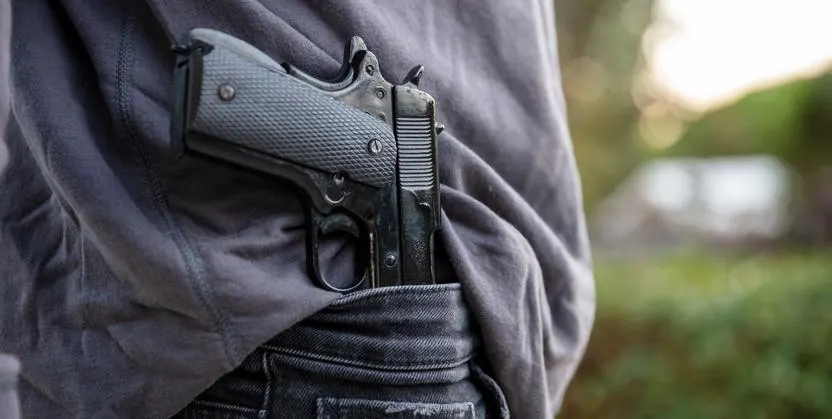
Are you tempted to obtain a firearm to protect your family and property even though you have a criminal conviction in your past? Everyone knows that crime is increasing and getting worse each day, and the right to bear arms is in the United States Constitution.
According to Statista, in 2021, property crime was the most common type of crime committed in the United States, with 6.53 million offenses. In the same year, there were 2.55 million violent crime cases, of which there were 2.3 million cases of assault. With statistics like these, it is easy to justify possessing a firearm, but is it the wise thing to do if you have a criminal conviction and what are the consequences?
If you are accused of committing a federal offense in Florida involving a firearm, contact our experienced federal possession of a firearm lawyer. With over 34 years of experience defending clients against federal charges, West Palm Beach criminal defense attorney Ronald S. Chapman can guide you through this challenging legal process. With so much at stake, call us today at (561) 832-4348, so we can begin to help you.
Individuals Prohibited by Federal Law from Possessing Firearms or Ammunition
Federal law prohibits the following categories of people from owning firearms or ammunition:- Felony conviction (state or federal court conviction)
- Misdemeanor domestic violence offense conviction
- Military members dishonorably discharged
- Drug addicts or users
- Citizens of the United States who renounced their citizenship
- Fugitives from justice
- Persons subject to a domestic violence restraining order
- Felony indictment
- In the United States unlawfully, or under non-immigrant visas
Finally, some weapons, such as machine guns and unregistered firearms, are prohibited for all owners to possess. Federal charges may also result from firearm use in violent or drug-trafficking crimes.
How Do Crimes Come Under the Jurisdiction of the Federal Court?
In general, a crime will be subject to federal court jurisdiction if it is being investigated by a federal law enforcement agency (such as the FBI, DEA, ICE, ATF, etc.) and/or if it is subject to federal charges.Federal Charges You Face
If you are detained by a federal law enforcement official, such as an FBI, DEA, or ATF agent, you will be charged with a federal crime and must appear in federal court. Many of these crimes carry mandatory minimum prison sentences.Firearm offenses, whether under state or federal jurisdiction, carry harsh penalties. If you have been accused of such a crime, contact an experienced criminal defense lawyer as soon as possible. It is critical to begin working on your defense to build a strong case.
What Are Some Defenses to a Charge of Illegal Possession of a Firearm?
Possible defenses to a charge that your federal criminal defense attorney may be able to raise include, but are not limited to, the following:- You were not a prohibited person and were allowed to carry the firearm
- You were unaware that you were in possession of a firearm
- You didn’t possess the firearm
- Your firearm was an antique
- You were defending your family at home
- Law enforcement violated your rights through an illegal search and seizure
Sentencing and Punishment for Federal Firearm Crimes
Illegal firearm possession is not considered a violent crime under federal law. However, using a gun to commit another crime, on the other hand, can be considered violent. The sentence imposed in federal courts for illegal firearm possession reflects this. By far, the most common type of sentence was imprisonment. This is most likely due to most defendants having a prior record, making probation less likely. It also implies that the underlying offense was likely considered a violent crime in certain circumstances.For example, the United States Sentencing Commission reports that there were 264 convictions for illegal firearm possession in Florida 2021. Out of the 264 convictions, 253 individuals (95.8%) took a plea deal, with 11 individuals (4.2%) choosing to go to trial. 252 individuals (95.5%) were ultimately sentenced to prison.
Federal charges typically result in much harsher sentences than state criminal charges. Your federal possession of a firearm lawyer can go over what penalties and any other consequences you might face once they review your case.
Why You Need a Federal Possession of a Firearm Lawyer
Federal gun charges carry severe penalties, including life in prison. These cases are tried in federal court, and you need an attorney experienced with federal firearm charges and admitted to practice in federal court. These cases are complex, and your attorney must understand how the federal sentencing guidelines work and how they will affect you.Can My Civil Rights Be Restored?
If you are currently barred from owning a firearm, you may be able to reclaim your civil rights. To do so, you must apply for clemency. If approved, you will be able to carry a firearm. You can use this as a defense if charged with illegal possession.Contact Ronald S. Chapman, P.A. If You’re Facing Federal Firearm Charges in West Palm Beach, Florida
With more than 34 years of experience defending clients against federal charges, criminal defense attorney Ronald S. Chapman knows what to expect during each stage of your case. The potential consequences of a federal firearm conviction include jail time, fines, a permanent criminal record, loss of employment, loss of child custody, and irrevocable harm to your reputation.With so much at stake, you need assertive representation by a criminal defense attorney who will protect your rights. Call for a meeting at (561) 832-4348.