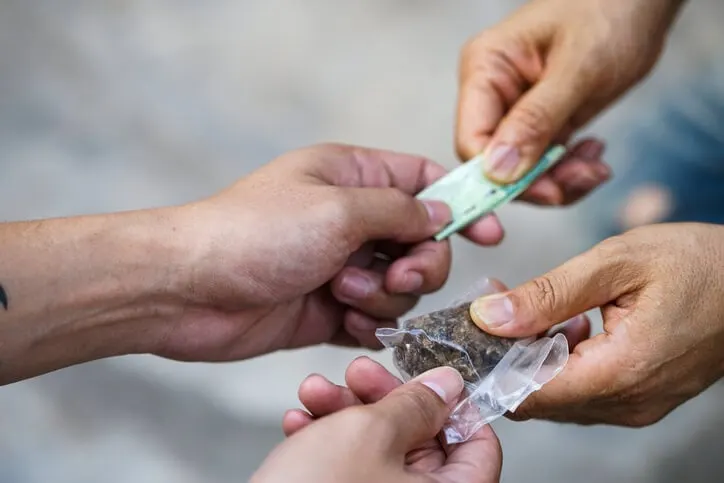
Drug trafficking may bring to mind international drug cartels. However, drug trafficking within the U.S. carries serious legal consequences that differ from state to state. In particular, drug trafficking in Florida can result in life-altering penalties.
You may feel at a loss for what to do if you’ve received a drug trafficking charge in Florida. Fortunately, a lawyer proficient in criminal law can help you navigate drug-related laws and statutes in Florida. You’ll also need a competent lawyer to craft an effective defense for you in the courtroom.
In Palm Beach County, FL, if you’ve been accused of drug trafficking, get help from a competent criminal attorney. Ron Chapman is a defense lawyer with a deep understanding of criminal justice and criminal code. Contact his law firm today at (561) 832-4348 to schedule a meeting.
Drug Trafficking Laws and Statues in Florida
Drug trafficking criminal law varies throughout the U.S. Florida law has numerous fundamental statues to keep in mind.First, Florida law defines drug trafficking as the production, purchase, and sale of illegal drugs. These drugs consist of controlled substances such as recreational and prescription drugs. Moreover, Florida treats a person with the intent to sell a controlled substance the same as one actually selling it.
Examples of controlled substances include:
- Marijuana
- Cocaine
- Heroin
- Ritalin
- Xanax
- Methamphetamine (“crystal meth”)
- LSD
- Opium
- OxyContin
For instance, Xanax is a Schedule IV substance given its relatively low potential for abuse and its medical usage as an antianxiety drug. On the other hand, heroin is a Schedule I substance with a high potential for abuse and no medical applicability.
The amount you possessed of a controlled substance also affects the gravity of a drug trafficking crime. For instance, trafficking four grams of a controlled substance entails far lighter penalties than trafficking over 100 grams.
A Criminal Attorney’s Overview of Drug Trafficking Penalties in Florida
Most states treat drug trafficking as a felony, and Florida is no exception. In fact, Florida requires a minimum sentence for drug trafficking. For example, if a judge convicts you of trafficking between four to 14 grams of heroin, you’ll receive at minimum a sentence of three years in prison plus a fine of $50,000.In general, trafficking recreational drugs carries stiffer penalties than trafficking prescription drugs. The steepest penalties come from trafficking high amounts of Schedule I drugs, which can result in a life prison sentence. Nonetheless, prescription drug trafficking can also incur jail time and a fine.
Armed drug trafficking carries very harsh penalties. Armed trafficking refers to carrying a firearm or other deadly weapon while manufacturing, buying, or selling a controlled substance. Even threatening to use a weapon counts as armed drug trafficking.
How Criminal Lawyers Can Help with Drug Trafficking Charges
A criminal attorney will work with you to build a substantial defense for your case. Typically, your lawyer will first try to negotiate for a dismissal of charges. If your case goes to trial, your lawyer will ask for lighter penalties in place of a conviction, such as a diversion program. Much depends upon your mental state.Criminal lawyers are also familiar with many defense arguments that might apply to your case. These defenses include but are not limited to the following arguments:
- You didn’t know that a drug was a controlled substance
- You had no intent to sell a controlled substance
- Another party planted the drugs on the defendant or the defendant’s property
- The drug belonged to another party
- Law enforcement officers misidentified the drug as a controlled substance
- A doctor authorized use of the drug for medical reasons
- You have never before received a drug trafficking charge
Your penalties depend on the specifics of your case but may consist of:
- A mandatory prison sentence
- A fine as high as $750,000
- A drug trafficking charge on your criminal record
- Obtain employment
- Secure a bank loan
- Get approved to rent an apartment
- Purchase property such as a house or vehicle
- Gain admission to educational institutions